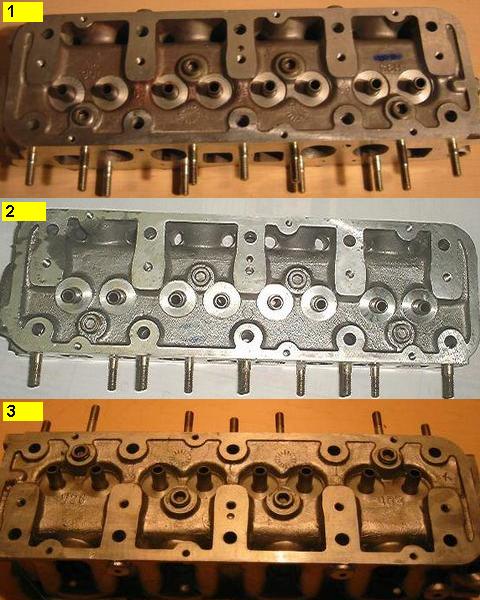
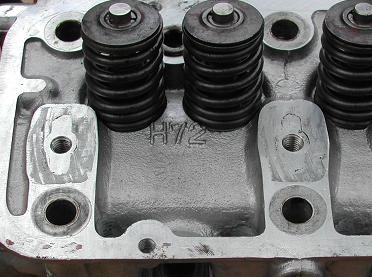
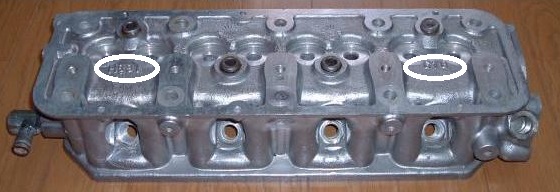
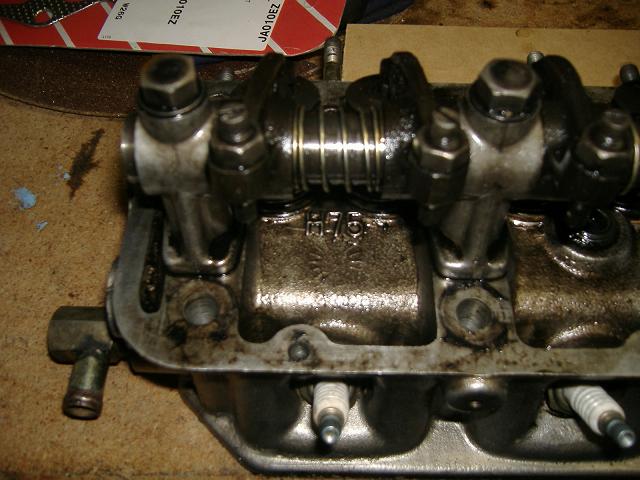
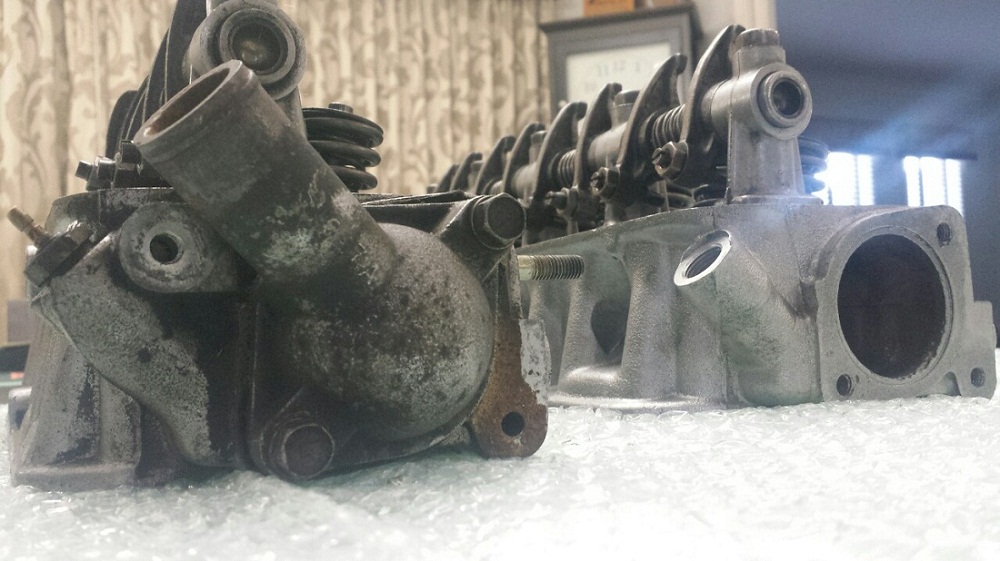
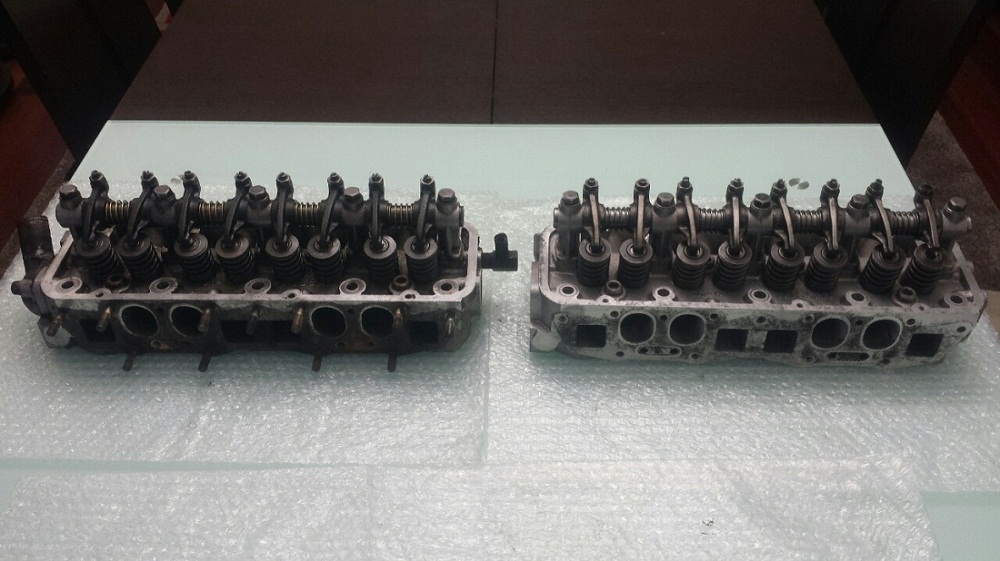
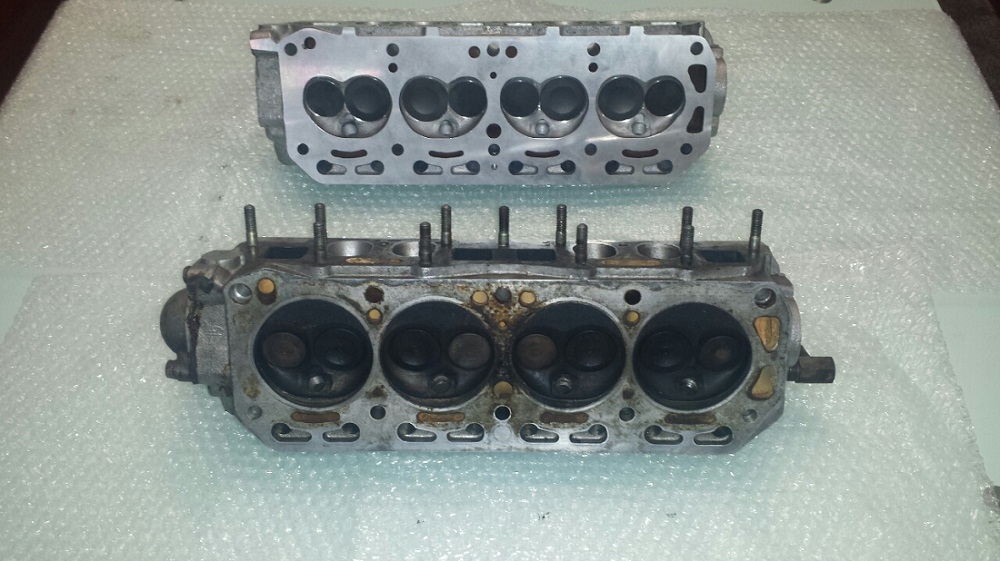
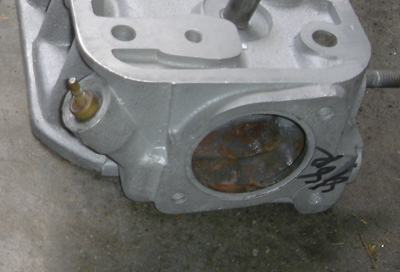
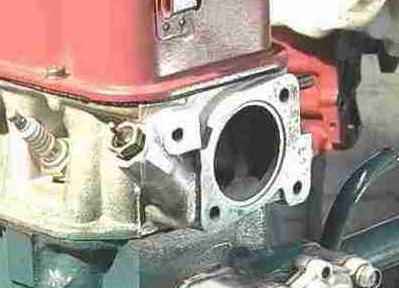
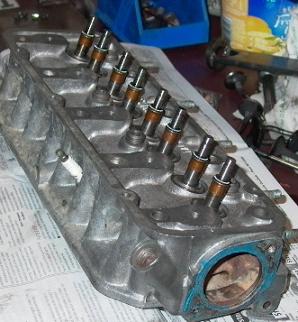
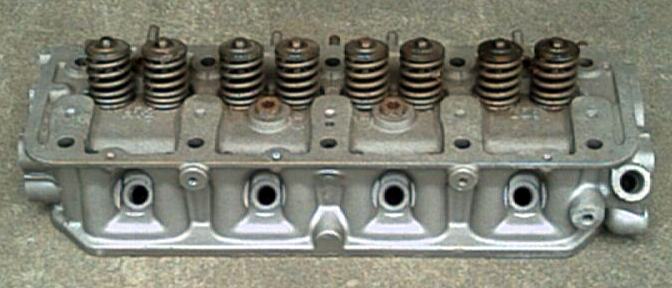
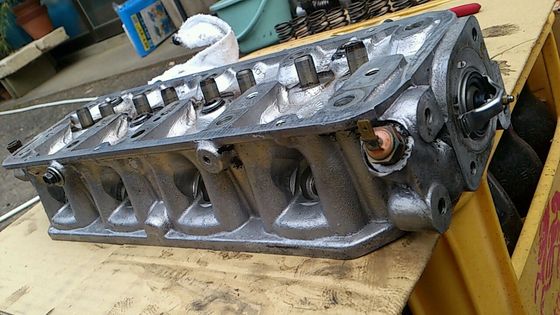
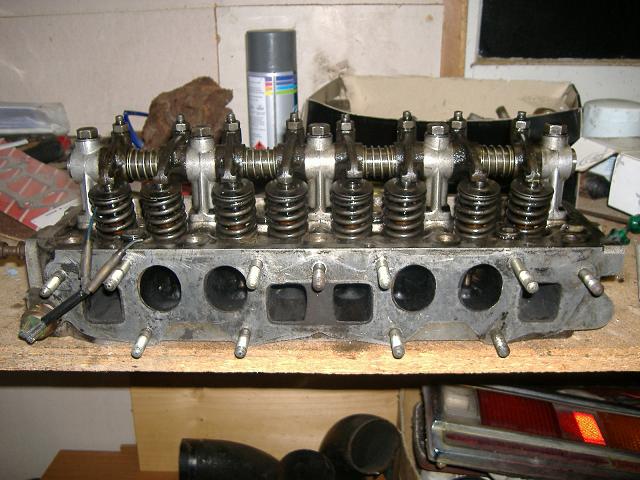
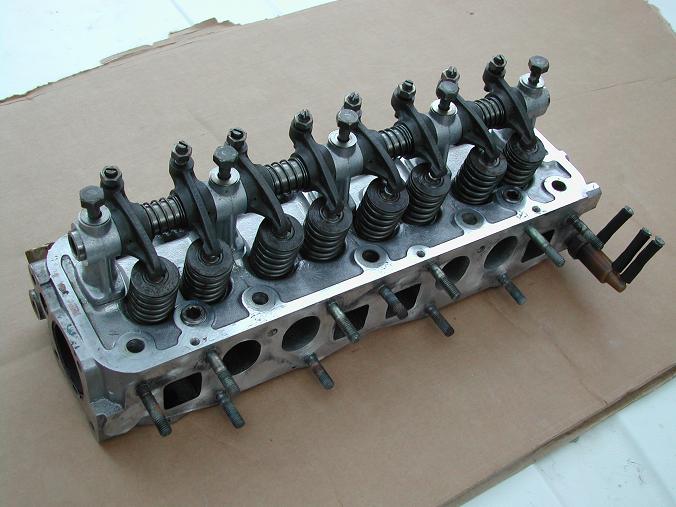
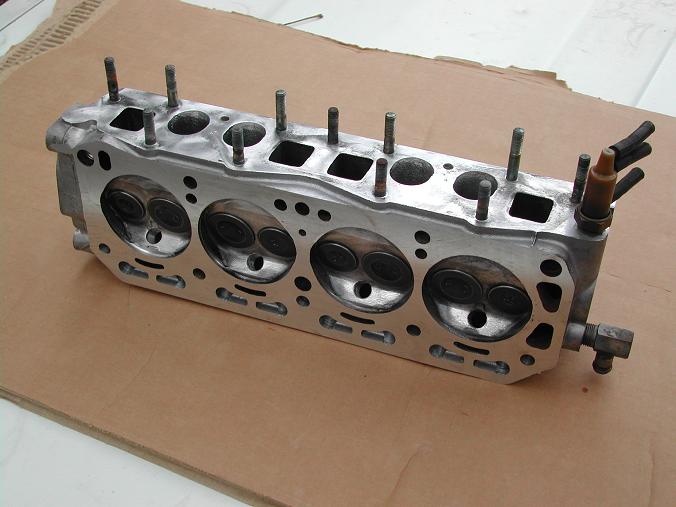
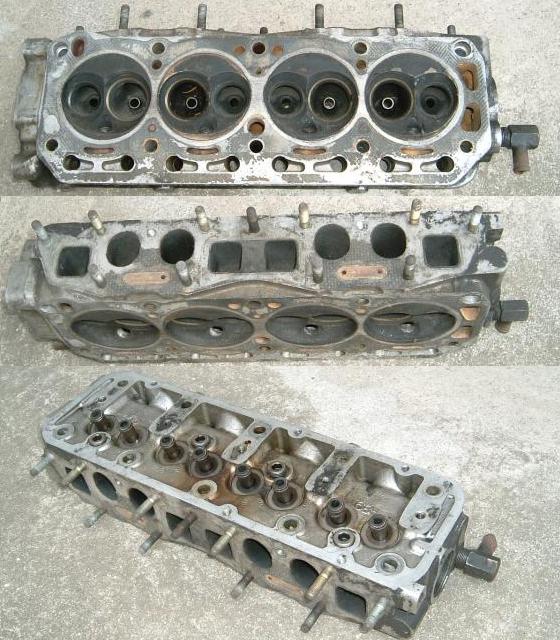
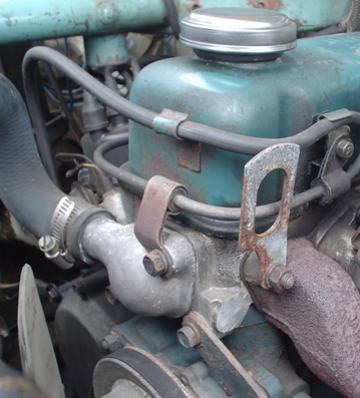
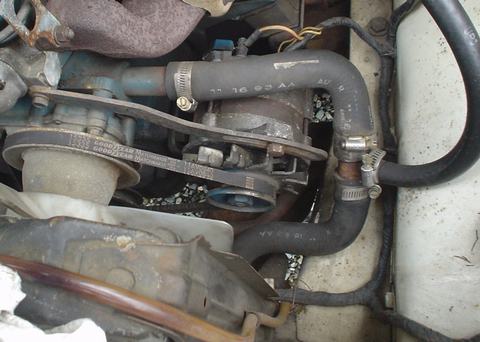
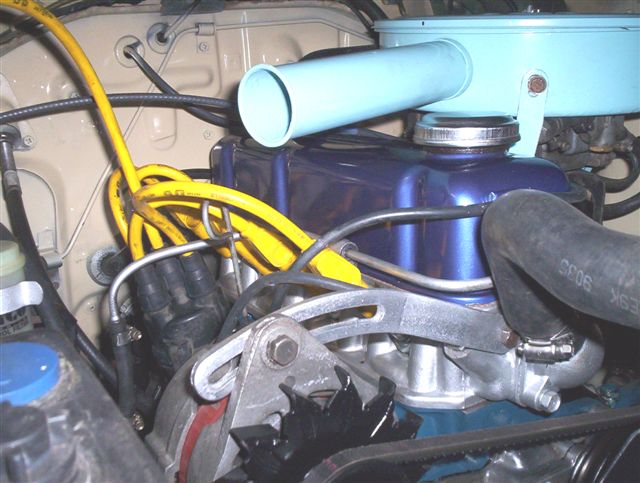
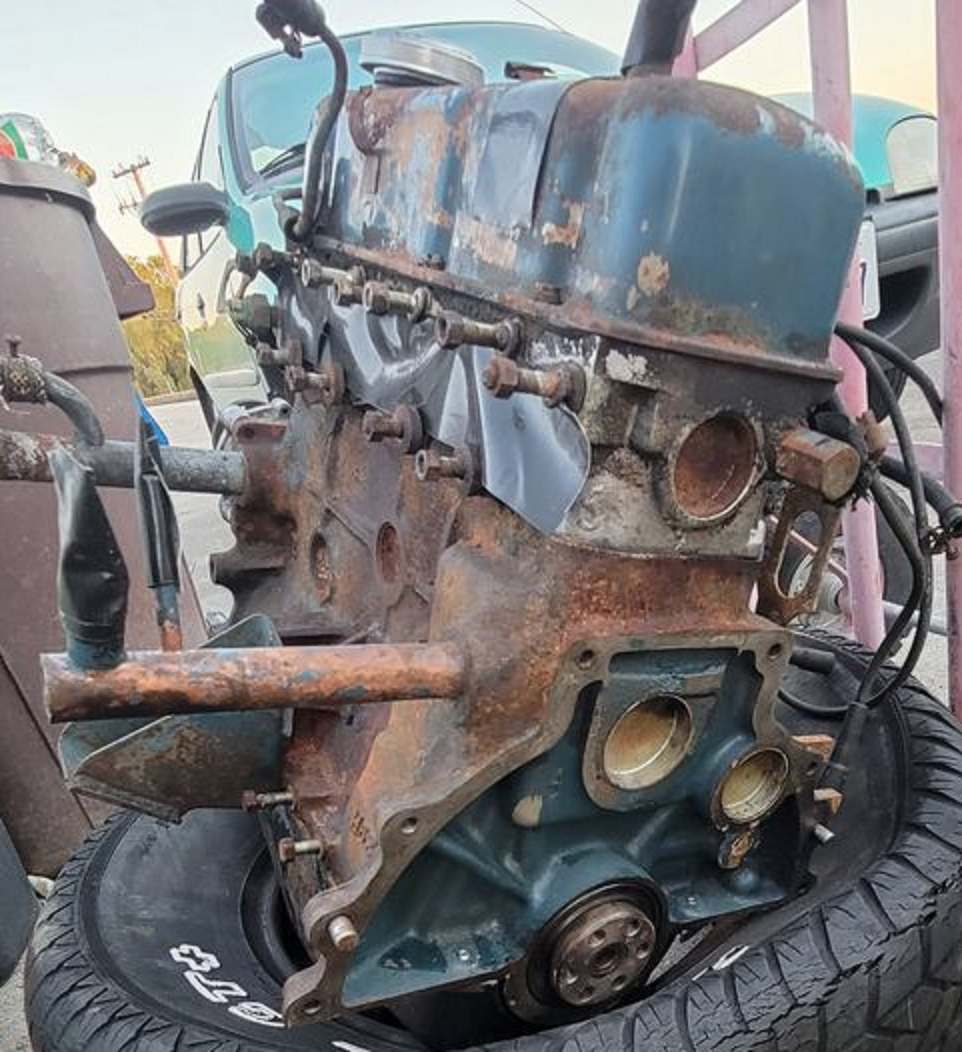
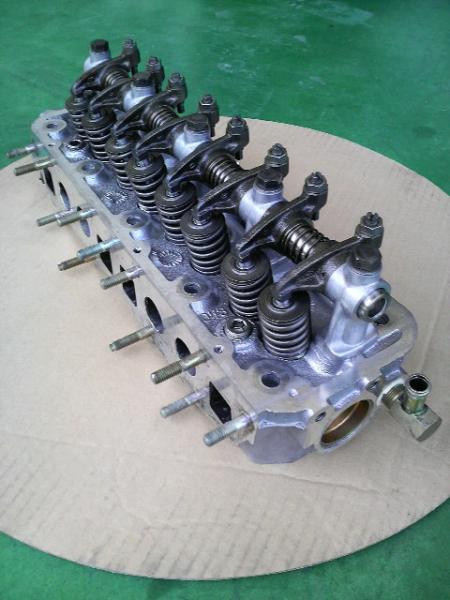
For the cylinder head, the best way to tell which head you have is to check the casting number in the valve train area (remove the rocker cover to look for this number).
If the head you are looking at does not have a casting number, see the next section: Distinguishing Features.
Once you have the casting number, see Nissan Part Number Prefixes for a table of the different model to part numbers. For example, H23 means the part was originally designed for B110 GX models.
A10 may have "180", "H01", "257", "H03" or no markings at all
1971-1973 A12 may have "180", "H10" or "H39". Some have no markings at all.
3794.jpgAlbum 3794
A12 GX may have "H23" or "230"
76 Sunny trucks (A12) may have M30, G25, G61
1974 A13 may have "H62" or "620"
A14 could have several different ones, such as G32, H72 (or 728), H74, H75, H77, H78, H85, H92 or H98 depending upon year, country, and emission control design.
5254.jpgAlbum 5254
The casting number will be the first 3 digits of the last half of the part number, as all cylinder head part numbers begin with the same 5 digits (11041). For example:
11041-H2300 or 11041-H2301 HEAD ASSY-CYLINDER A12 GX * 11041 is the base part number for all cylinder heads * "H23" means the part was first used on the B110 GX vehicle. * "728" is short for H728x, indicating a B210 "H72" part
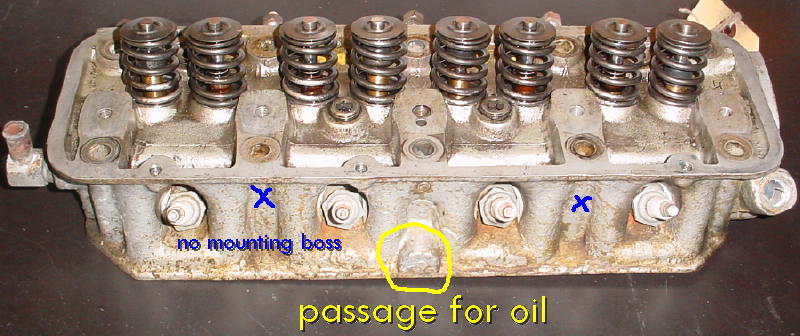
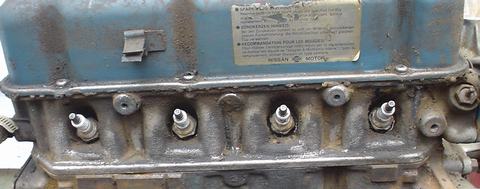
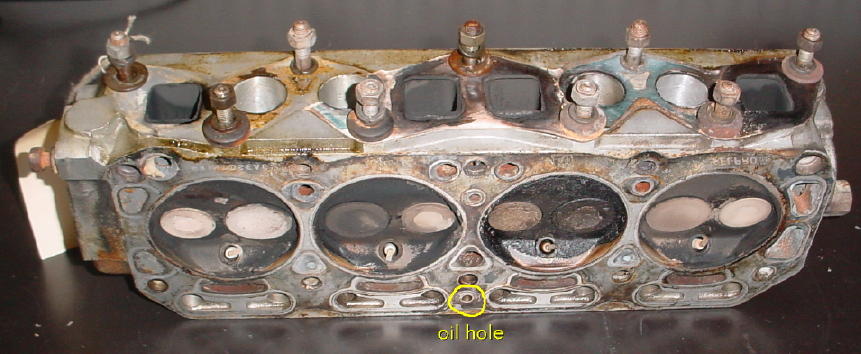
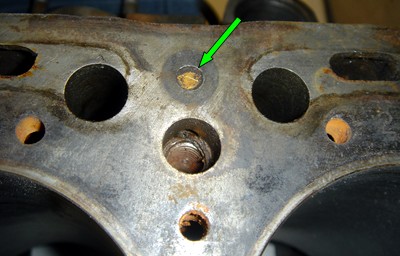
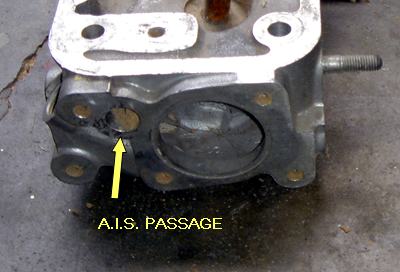
Only pre-1974 engines will have this passage in the cylinder head, from factory. It is, however, possible for this oil passage to be drilled on a 1974-onwards engine. But it is a good indicator nonetheless.
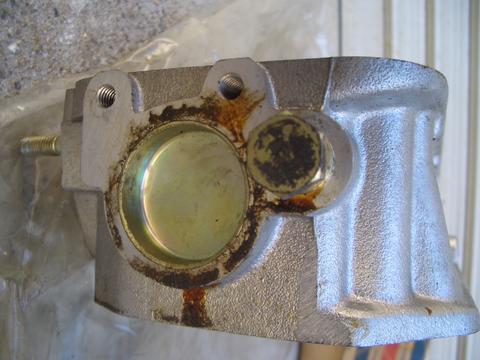
For verification of an original, pre-1974 cylinder head, inspect the cylinder head for the following:
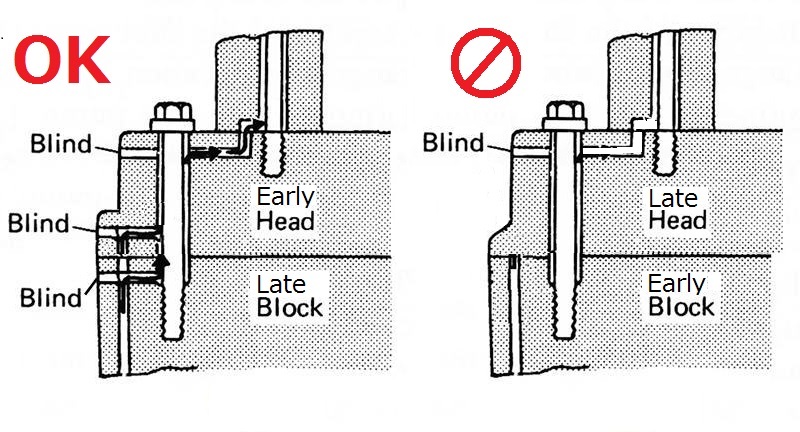
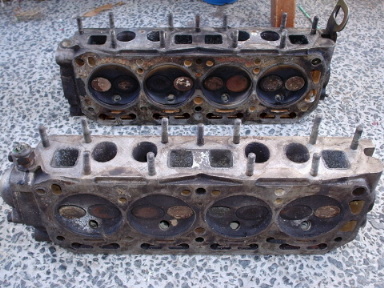
Any A-series cylinder head can be bolted onto any A-series engine block. However, compression ratio, port size (oval port, and round port), and manifold stud pattern need to be taken into consideration. Naturally, it is best to match port type, and size (e.g round port manifold, and round port cylinder head). The most critical difference, is the rocker shaft oil passage. It was relocated in 1974, as part of the A-series engine redesign.
Cylinder head oil passage
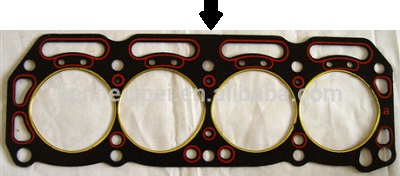
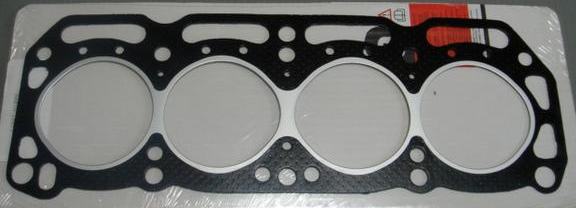
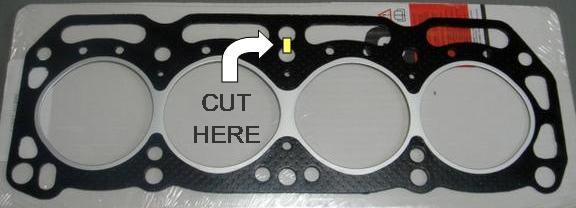
An extra oil passage in the cylinder head is required, for some engines. For pre-1974 engines, ensure your head gasket has the corresponding hole! You can punch, or drill, a hole in the head gasket if necessary.
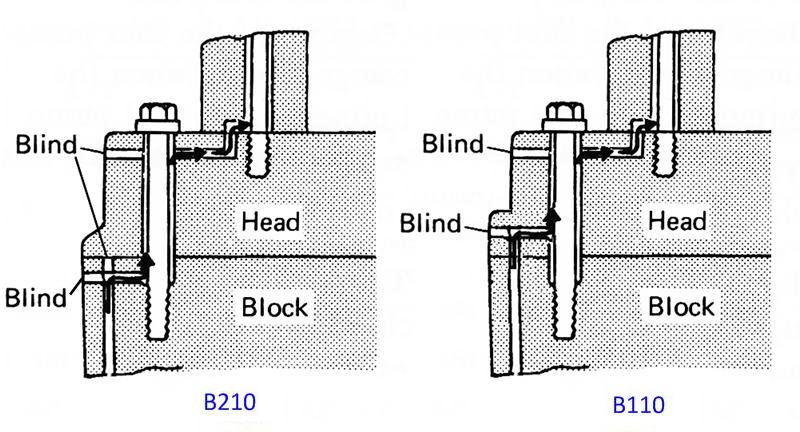
Late blocks do not send the oil up through the small passage, so do not need the hole in the gasket. Instead oil flow through the head bolt hole. So late blocks can work with either old or new heads. See Block_Comparison#Head_Oiling
Any cylinder head old or new can be used with old or new engine.
A pre-1974 cylinder head will bolt onto any engine block, with no modification required.
A 1974-onward engine block will work with any cylinder head. But, in the case of bolting a 1974-onward cylinder head to a pre-1974 engine block, a minor oil passage must be created.
I have seen a crude system where a 1200 head gasket was placed on the head to determine the position of the oil feed hole in the block. This was centerpunched & a very shallow hole was drilled. [about 1 to 1.5mm] then an angle grinder was used to grind a small trench across the gasket face to provide an oil passage froom this shallow hole to the nearest head bolt hole.
Crude as hell, but it worked. A very steady hand would be a prerequisite.
Personally, I would suggest a milling machine if this method is used.
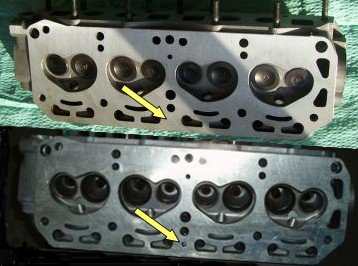
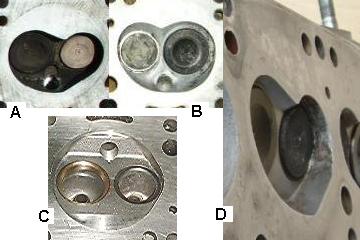
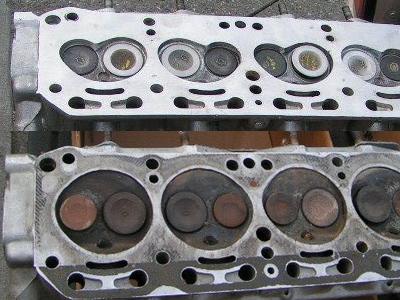
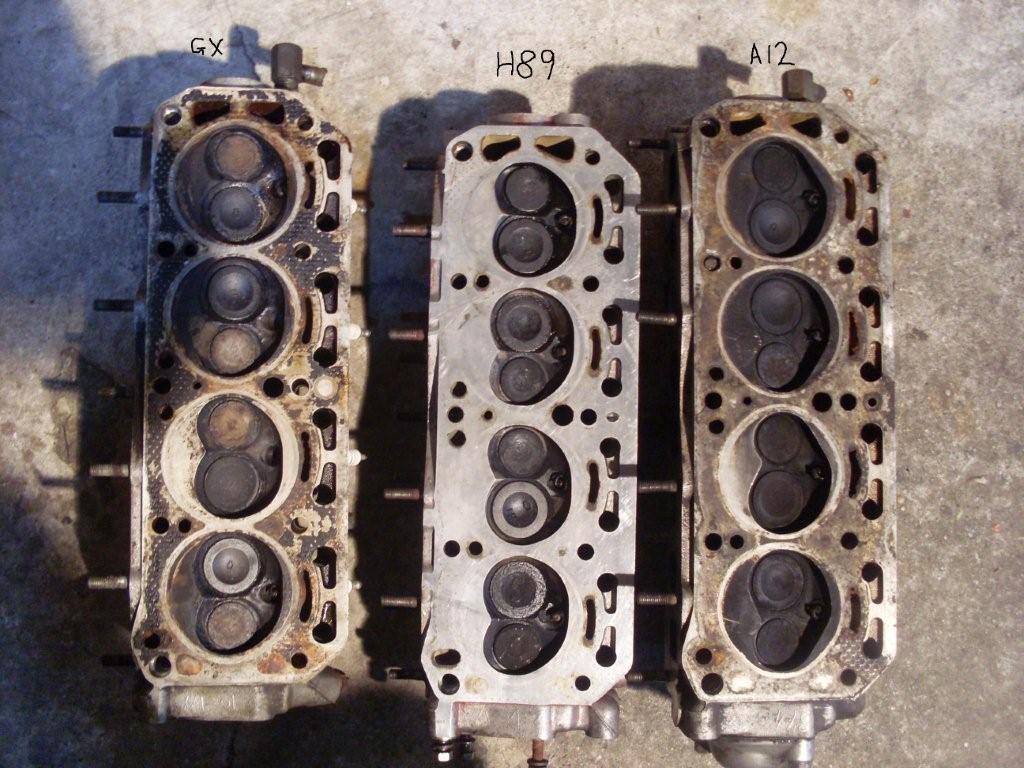
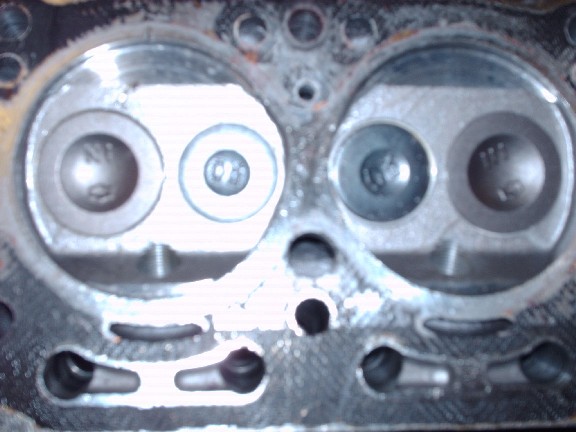
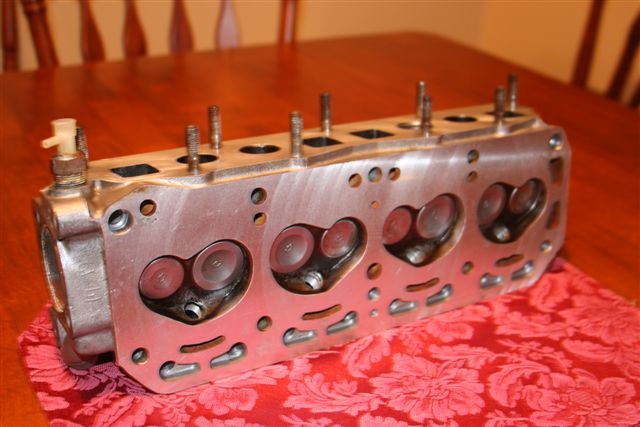
All Datsun A-series production cylinder heads have a wedge-shaped combustion chamber. However, most USA models are equipped with a cylinder head that is open-chambered, for lower NOx emissions. The 'heart-shaped' combustion chamber has a superior power output due to the closed-chamber design, with a large quench area.
A,B: Heart-shaped high-compression chamber - good for high-octane gasoline.
Also known as closed-chamber, peanut-shaped, butterfly-shaped or kidney-shaped.
Round - Best for low-RPM operation (more power under 4,000 RPM)
1233.jpgAlbum 12336119.jpgAlbum 6119
All A12s, later A13s, some A14s, and (reportedly) Vanette A15s.
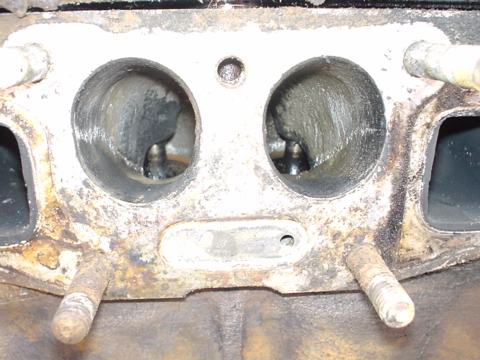
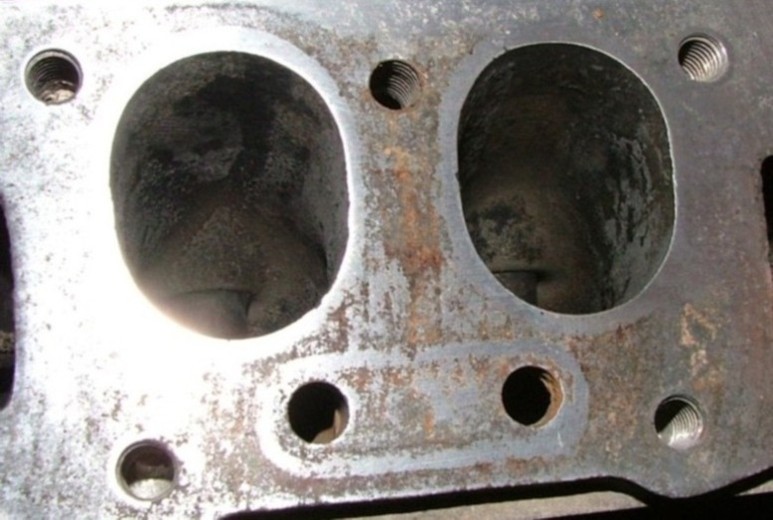
Small oval (28 mm x 30 mm). The 1974 A13 has this design.
Small oval, with swirl obstruction. These are better for emissions and fuel economy (H95 head, 1981-1982 USA all engines)
4444.jpgAlbum 4444
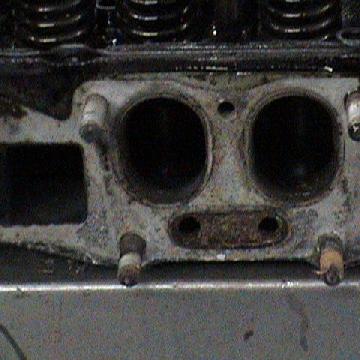
Regular oval (28 mm x 34 mm). These standard A14/A15 ports are best suited for high-RPM operation, or for the larger displacement engines.
26285.jpgAlbum 2628514888.jpgAlbum 1488814886.jpgAlbum 1488612714.jpgAlbum 12714
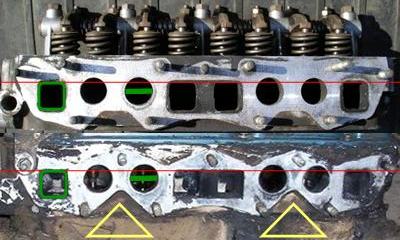
NOTE: the top of the port comes up to the centerline of the top manifold studs.
^Regular oval (28 mm x 34 mm) notched for injectors. A14E/A15E 92HP engines
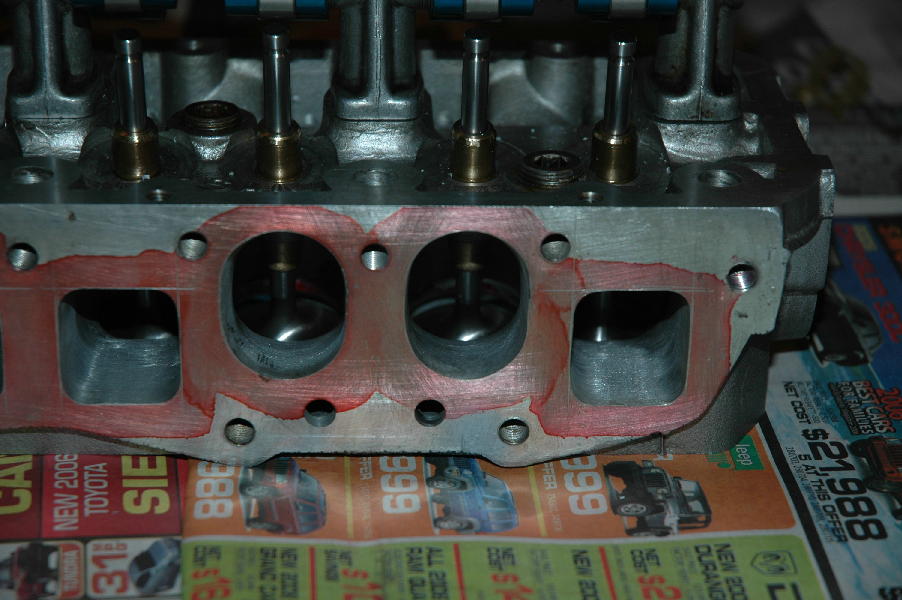
Large oval (GX and A12T, 30 mm x 36 mm). From A12GX Engine and B210 or Cherry A12T engines.
4441.jpgAlbum 44419028.jpgAlbum 902812131.jpgAlbum 12131
NOTE: the top of the port comes up as high as the top of the top manifold studs (port comes up past the manifold stud centerline).
^
The cylinder head for the A14 EFI engine has less intake and exhaust resistance.
Early head with oval ports is either an A12GX head, or its twin, the early A12T head from the Nissan Cherry (E10). These are the high-revving heads for the factory Hitachi Twin Carb engines.
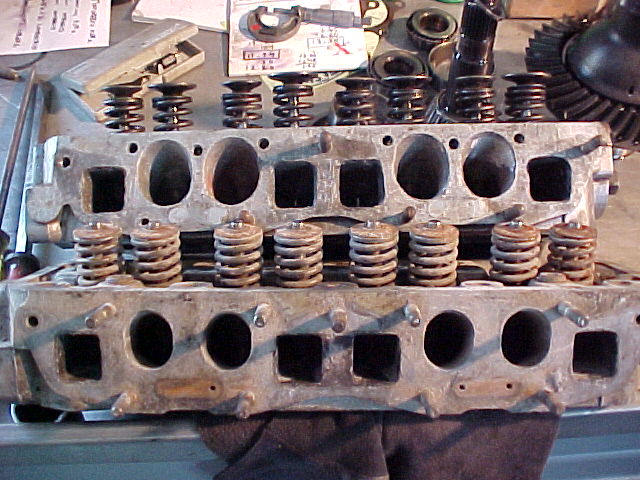
* Round port 28mm: A12 * Round port 28mm lowered: A14 GFU * Small Oval port 28x30mm: A13, A12A * Medium Oval port 28x34mm: A14 * Large Oval port 30x34.5mm: A12GX Engine
The bolt pattern on the cylinder heads also differ. early A10/A12 heads are only drilled for the older pattern. Newer A12 (1980s/1990s) are drilled for newer pattern. Some newer heads are drilled for both.
So dual springs are a good indication of a special head, but not conclusive. You will need to check the intake port sizes and other features to make a final determination.
Valves
All A-series engine use valves with 8mm diameter stem
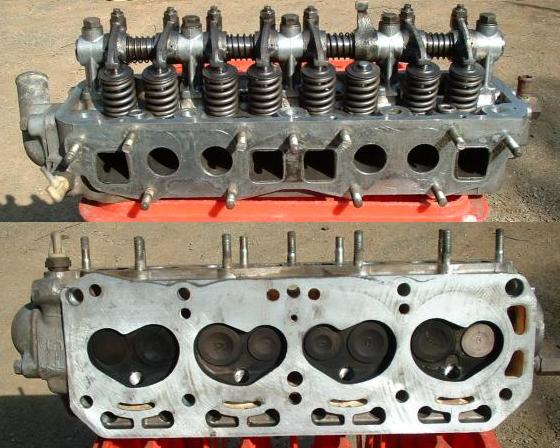
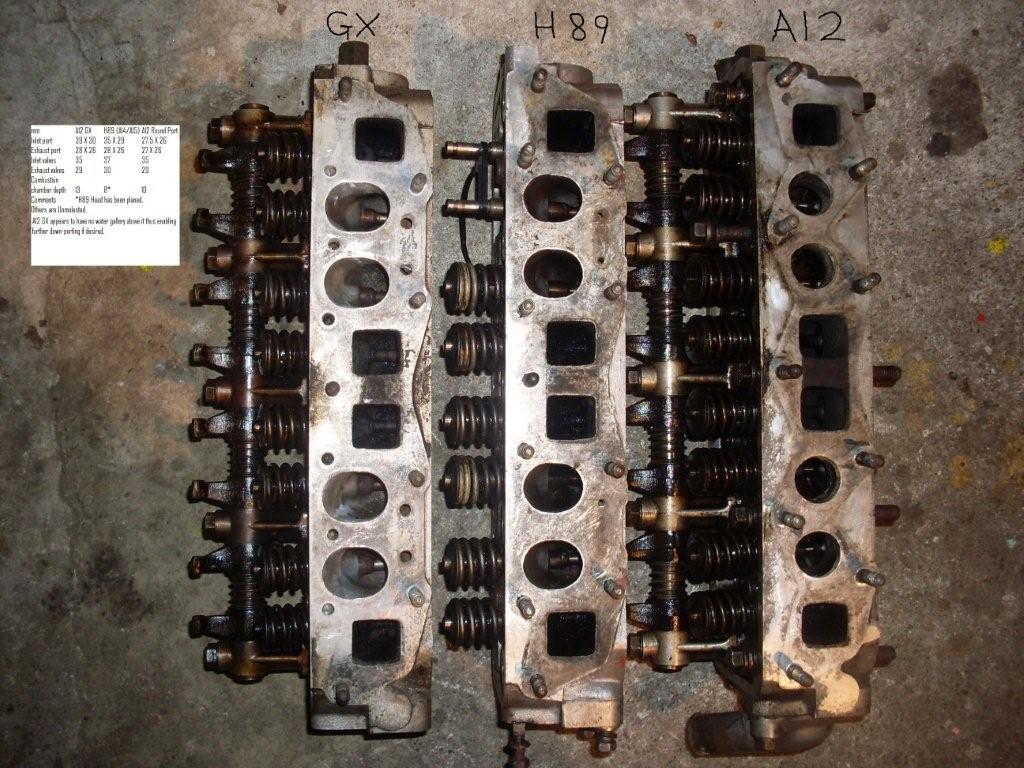
A true A12GX cylinder head has all these features:
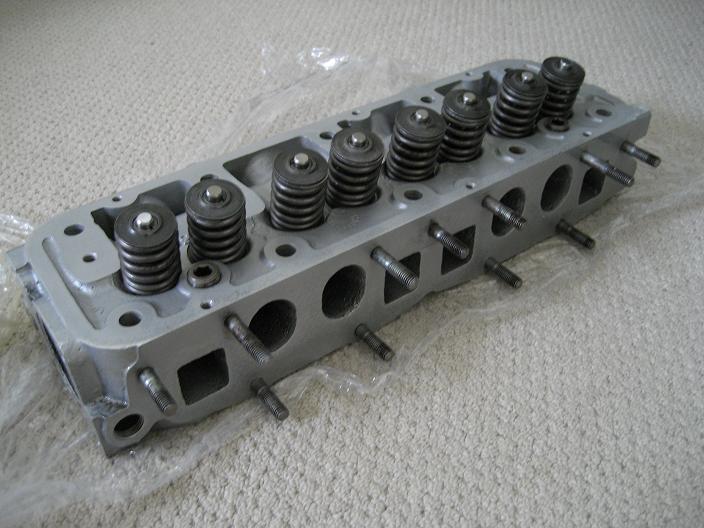
Dual valve springs
No casting numbers
Large Oval port 30x34.5mm. These ports are raised, and extend above upper intake bolts
27x29 mm exhaust ports
closed combustion chamber - heart shaped, large size combustion chamber of 29.1 cm3
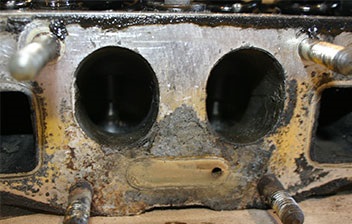
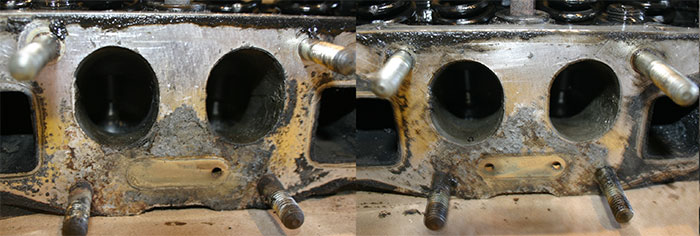
large water holes (one under each intake port). Each hole is about the diameter of a pencil (non-GX heads have small holes)
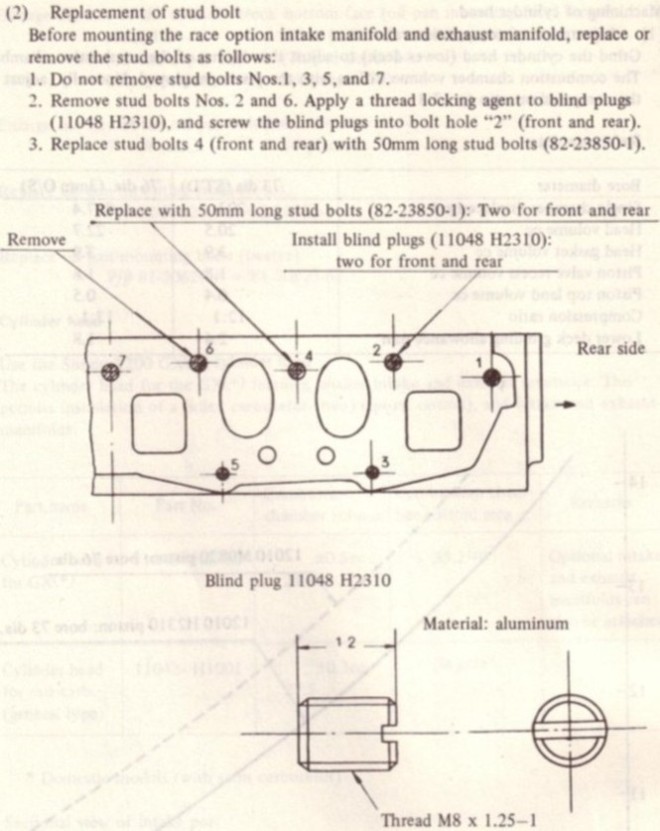
Seven upper intake face bolts, nine bolt holes (vs only 5 for other pre-74 heads)
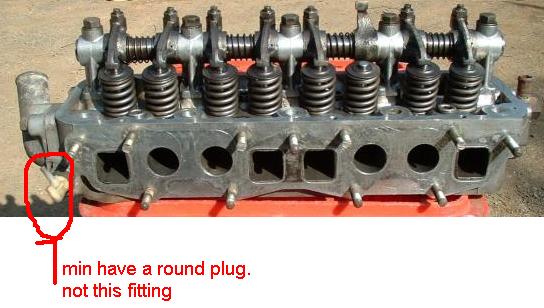
As with all pre-74 heads, Oil passage on head face (spark plug side), oil boss on side face between plugs 2 & 3 just above head face
SAME valve sizes as standard A12: 29mm exhaust, 35mm intake
NO bosses on sparkplug side between 1&2 and 3&4
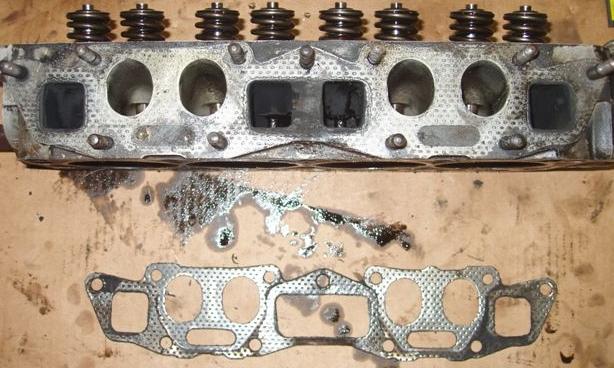
One way to identify a GX, when the head is still installed: Look for the oil passage boss (indicating an early head), and for seven studs on the top of the inlet/exhaust manifold gasket. This combination is a good indicator of an GX (or early A12T) head. Regular early heads have only five studs along the top of the gasket.
5 mm water ports below the intake ports
closed chambers
oil hole between push rod holes for Nos. 2 & 3 cylinders
Early head with oval ports is either an A12GX head, or its twin, the early A12T head from the Nissan Cherry (E10). These are the high-revving heads for the factory Hitachi Twin Carb engines.
GX and A12T (non-GX) heads have small bulges on the top side (for the raised manifold bolts):
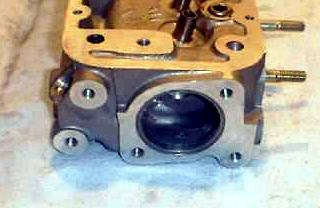
Variations * No boss * Front boss only * Rear boss only * Both Front and Rear bosses
In addition, bosses can be present but not drilled & tapped. For example, an H72 casting can be processed either way (drilled or undrilled). The difference merits a different Part Number, for example H72 casting part number 11041-H7200 and H72 casting part number 11041-H7240.
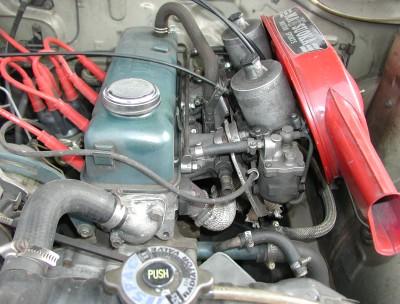
Early A-series engine (front distributor) mounted the alternator on the left side of engine, because the distributor and oil pump are on the right side.